For Jose Luis Garcia, a dairy farm worker in rural Goodhue County, the advice to eat more vegetables often felt like an impossible request. Between grueling hours spent milking cows and the scarcity of affordable grocery stores in the countryside, fresh produce remained out of reach for him and his young family. In these remote stretches of Minnesota, healthy food is frequently more expensive than processed alternatives, creating a systemic barrier that makes doctors’ orders feel disconnected from reality.
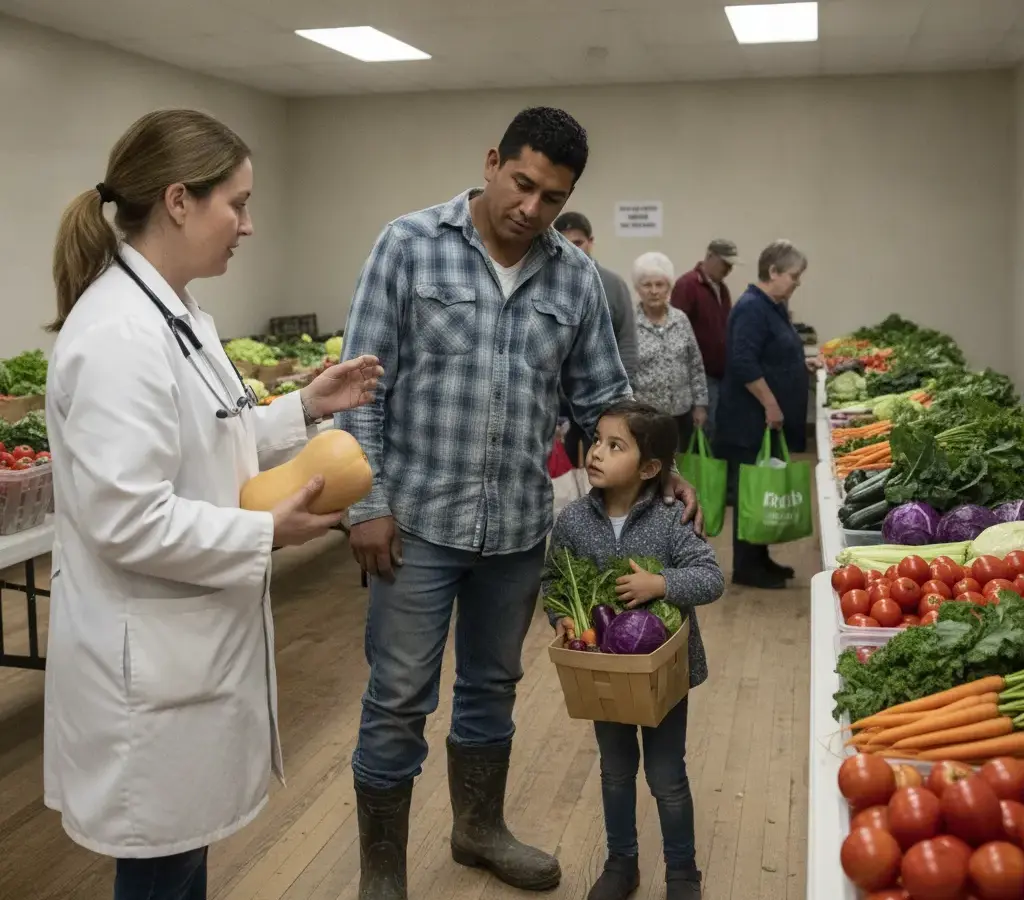
To bridge this gap, the CARE Clinic in Red Wing has introduced a program called VeggieRx, also known as the Fresh Food Farmacy. Instead of simply telling patients to change their diets, the clinic provides them with actual groceries. Near the clinic entrance sits an industrial sized refrigerator stocked with crisp lettuce, cucumbers, apples, and oranges. Every week, uninsured and underinsured patients can fill bags of produce tailored to their family size entirely for free.
The initiative treats nutrition as a form of clinical intervention rather than just a lifestyle choice. Julie Malyon, director of the CARE Clinic, viewed the project as a way to test whether consistent access to fresh food could manage chronic illnesses. Collaborating with researchers from the Mayo Clinic Health System, Malyon discovered that diabetic patients who used the pharmacy saw significant reductions in their A1C levels and improved overall glycemic control. By providing enough food for entire households, the clinic is also attempting to break generational cycles of poor health by introducing nutritious options to children.
While experts note that grant funded programs cannot solve every aspect of regional food insecurity, they represent a critical shift in how healthcare operates. Rural grocery stores often avoid stocking perishable greens due to lower customer volume and higher transport costs, leaving residents trapped in food deserts. By integrating a pharmacy of produce into primary care, providers are moving beyond generic medical advice and offering tangible tools that allow their patients to actually achieve a healthier life.